


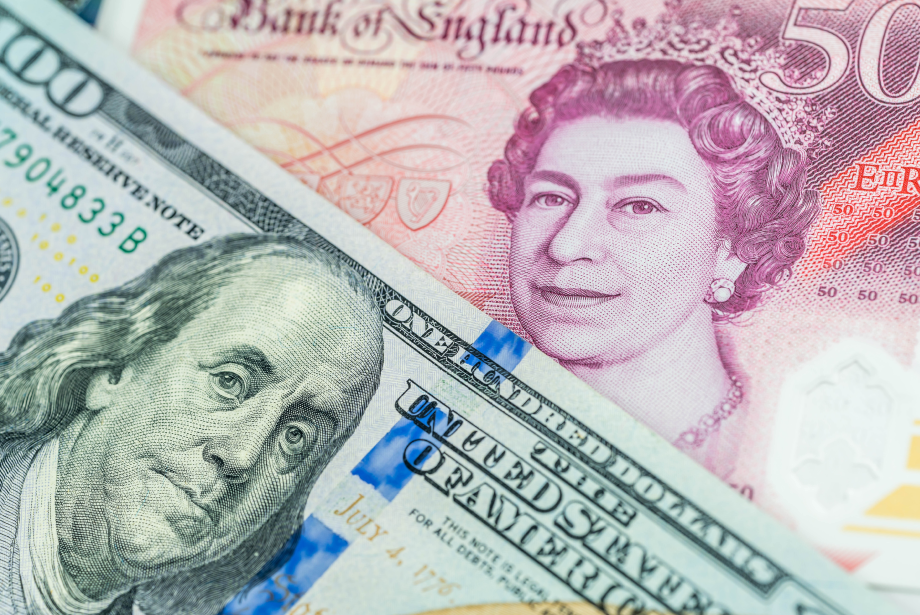
The British Pound has recently moved past the $1.30 mark in 2024, its highest level against the US Dollar in over a year. This shift occurred as market expectations for a UK rate cut were adjusted. Persistent inflation has led to speculation that the Bank of England may maintain higher rates, which could make the Pound more attractive to investors.
Market optimism also stems from hopes that the new labor government will bring political and economic stability. As central banks elsewhere have begun easing, the UK's relatively firmer stance has potentially contributed to capital inflows and increased demand for Sterling in the context of global political and economic uncertainties.
This article will explain why the Pound (GBP) is stronger than the Dollar (USD).
Historical performance of GBP and USD
Over the past five years, the GBP/USD exchange rate has fluctuated due to various economic and geopolitical factors. In May 2020, the pair traded around 0.81. By April 2025, it reached approximately 1.30, indicating an overall appreciation of the British Pound against the US Dollar during this period.
However, this upward trend was not linear, with notable volatility throughout. For instance, in April 2025, the GBP/USD pair showed fluctuations, with rates dropping to as low as 0.77.
On the other hand, over the past five years, the USD/GBP exchange rate has fluctuated, reflecting shifts in economic conditions and market sentiment. In May 2020, the exchange rate was at approximately 0.81 GBP. As of early 2025, it is trading near 0.76 GBP, suggesting a modest depreciation of the US Dollar against the British Pound compared to the 2020 closing rate.
Overall, while the USD/GBP exchange rate has seen periods of both strength and weakness over the past five years, it has experienced neutral market stability during this period.
Factors that make the GBP stronger than the USD
Historical legacy and valuation standards
The British Pound is one of the oldest currencies, with a long history of stability and value, in part due to the UK's global trade influence. This legacy contributes to its relative strength in valuation terms compared to the USD.
The Pound's historical valuation was influenced by its gold-standard legacy, while the USD's valuation post-WWII was adjusted for global trade stability.
Lower money supply relative to the US Dollar
The GBP often has a lower circulating supply than the USD. Since the US Dollar is printed and distributed on a much larger global scale, Pound's limited supply can help maintain a higher exchange rate due to basic supply-demand dynamics.
UK's tight monetary policy and higher interest rates
When the Bank of England adopts a hawkish stance (raising interest rates to combat inflation), foreign capital is attracted to seek better returns. This could increase demand for the Pound and potentially contribute to its value relative to the US Dollar.
Perception of economic stability and investor confidence
The UK may be perceived as relatively less volatile politically and economically, which can influence investor sentiment. This perception may increase confidence during periods of global uncertainty, prompting capital inflows into Pound-denominated assets and potentially supporting GBP strength.
Impact of the US Dollar as a global reserve currency
While the USD's reserve currency status creates high demand and leads to widespread circulation, this vast supply can dilute its value compared to more limited currencies like the GBP, which isn't used as extensively for international reserves.
GBP's lower circulation and limited global use
The GBP is more domestically focused than the USD, which is used globally for trade, reserves, and oil pricing. Its restricted use means less inflationary pressure from over-demand, helping retain a higher value relative to the more circulated US Dollar.
Trade balance and current account improvements
If the UK reduces its trade deficit or moves toward a surplus, the demand for GBP rises as foreign purchasers must convert their currency to pay for UK exports. A shrinking current account deficit improves currency fundamentals and can strengthen the Pound against the USD, especially if the US maintains a larger deficit.
Foreign direct investment into the UK
The UK has been encouraging foreign investment in UK real estate, infrastructure, and business sectors, which has increased demand for GBP. Investors need British Pounds to complete transactions, lifting the currency. When FDI inflows outpace those into the US during a certain period, the GBP can strengthen relative to the USD.
When should forex traders focus on the USD?
During major US economic data releases
Forex traders often monitor the USD during key US data releases, such as Non-Farm Payrolls (NFP), CPI, GDP, and unemployment reports. These indicators directly influence market sentiment and interest rate expectations.
A positive surprise in economic data often strengthens the US Dollar due to increased confidence in the US economy. Conversely, weaker-than-expected data may trigger USD weakness. These moments create high volatility and trading opportunities, especially in USD pairs like EUR/USD, USD/JPY, and GBP/USD.
When the Federal Reserve is expected to shift interest rate policy
Traders must focus on the USD when the Federal Reserve signals a change in monetary policy, such as interest rate hikes or cuts. Such shifts significantly impact bond yields and capital flows, which in turn affect the US Dollar's value.
Hawkish Fed moves may increase the USD's strength, while dovish tones could signal a potential weakening. Key events include FOMC meetings, Fed minutes, and speeches by Fed officials. These periods often bring strong market reactions, especially in USD-cross currency pairs.
In times of global uncertainty
During global crises or geopolitical tensions, traders tend to flock to less volatile assets like the US Dollar. The USD often gains strength in uncertain times due to its global reserve status and perceived economic stability.
Events like war outbreaks, financial crises, or pandemics can cause rapid USD appreciation as investors exit riskier currencies. Traders should monitor news cycles and risk sentiment indicators, as USD movements during such periods can be sharp and sustained across all major forex pairs.
When the US Dollar Index (DXY) shows strong directional movement
The DXY tracks the USD against a basket of major currencies and serves as a key indicator of US Dollar strength or weakness. When the index breaks key technical levels or moves with strong momentum, it signals a potential trend across USD pairs.
Traders should align their strategies with the DXY's direction, using it as a confirmation tool. A rising DXY often means shorting EUR/USD or purchasing USD/JPY, while a falling DXY suggests the opposite.
During US political or fiscal policy shifts
Significant events like elections, government shutdowns, debt ceiling debates, or major tax reforms can cause volatility in the USD. These shifts affect investor sentiment and economic forecasts, prompting traders to reassess US Dollar positions.
A less volatile political outlook typically supports the USD, while uncertainty or gridlock can weaken it. Monitoring headlines during such periods is crucial for timely trades.
When commodity prices fluctuate sharply
Since the USD is the pricing benchmark for commodities like oil and gold, major price swings can affect its value. For instance, a sharp drop in oil may strengthen the USD due to reduced inflation pressure and stronger purchasing power. Commodity-linked currencies, such as CAD or AUD, often move inversely to the US Dollar during such periods, offering clear trading opportunities.
Ahead of/during US Treasury bond auctions
The USD often reacts to changes in US bond yields, especially during treasury auctions or unexpected yield spikes. Higher yields make USD-denominated assets more attractive, increasing demand for the currency.
Traders should watch the bond market closely, as rising yields can indicate expectations of economic strength or upcoming Fed tightening. These are both bullish signals for the US Dollar.
When should forex traders focus on the GBP?
Around Bank of England meetings or rate decisions
Traders often monitor the GBP during Bank of England (BoE) meetings, particularly when interest rate decisions or forward guidance are released. Hawkish stances, such as rate hikes or inflation concerns, typically strengthen the GBP, while dovish commentary may weaken it.
BoE Governor speeches and voting patterns from the Monetary Policy Committee (MPC) are also critical. These announcements often cause sharp volatility in GBP pairs, such as GBP/USD, EUR/GBP, and GBP/JPY, offering prime trading opportunities.
During key UK economic releases
Major UK data points such as GDP growth, inflation (CPI), retail sales, unemployment, and PMI figures can significantly impact the GBP. Strong economic readings usually increase the Pound, signaling economic health and possible BoE tightening.
On the other hand, weak data may trigger a panic exit due to reduced confidence in the UK's outlook. Traders should track the economic calendar and prepare for increased volatility during these releases, especially when figures diverge from forecasts. The GBP/USD and EUR/GBP pairs react strongly to these shifts.
When there is UK political or Brexit-related news
The GBP is highly sensitive to political events, especially those involving Brexit negotiations, general elections, or major policy announcements. Political uncertainty often weakens the Pound due to concerns over economic stability and investor confidence.
Conversely, clarity or positive resolutions, such as trade deals or political consensus, can strengthen it. Traders should monitor UK parliamentary updates, EU-UK trade talks, and headlines from key political figures. Political-driven moves are often rapid and erratic, offering both risk and reward in GBP trading.
If GBP is showing broad strength or weakness across multiple pairs
When the GBP moves strongly across several forex pairs, it often signals a larger macro or sentiment-driven trend. This could be due to surprising economic data, a shift in BoE policy tone, or risk sentiment changes.
If GBP is rising against the EUR, USD, JPY, and AUD simultaneously, it suggests a genuine underlying strength rather than pair-specific behavior. Traders can spot these moves using a currency strength meter or relative performance charts and position accordingly across multiple GBP pairs.
During London trading session overlaps
The London session, which overlaps with both the Asian and New York sessions, is the most liquid and volatile time for GBP trading. High trading volume and participation from major financial institutions can lead to sharp intraday moves, especially in GBP pairs.
Traders should focus on GBP during this time for increased momentum and tighter spreads, which are ideal for day trading or scalping strategies.
When UK yield spreads shift relative to other economies
Changes in UK government bond yields compared to other major economies like the US or Germany can influence GBP strength.
A rising UK yield spread often signals expectations of tighter monetary policy or better growth prospects, increasing GBP demand. Traders watching global bond markets should consider GBP trades when UK yields begin diverging significantly, especially in pairs like GBP/USD or EUR/GBP.
During global risk-on or risk-off shifts
The GBP often shows strength in risk-on environments, when investors seek higher returns, and may weaken during risk-off periods when investors prefer less volatile assets.
Being a relatively high-beta currency, GBP reacts to shifts in global sentiment triggered by geopolitical events, financial crises, or central bank moves. Traders should pay attention to global equity markets, volatility indexes, and less risky flows to anticipate how GBP might behave in broader risk cycles.
Make the right currency call at the right time
Whether traders should invest in GBP or USD depends on macroeconomic conditions, interest rate trends, and global risk sentiment. The USD is ideal during times of global uncertainty, Federal Reserve tightening cycles, or when US economic data shows resilience.
While GBP may historically show upward movement around Bank of England rate decisions, during periods of strong UK economic data, or when it demonstrates broad strength across multiple forex pairs, currency markets remain volatile and outcomes are uncertain. Traders often observe the USD during stable market conditions and may monitor GBP when momentum or policy signals suggest potential shifts, keeping in mind that past trends do not guarantee future performance.
Disclaimer: All material published on our website is intended for informational purposes only and should not be considered personal advice or recommendation. As margin FX/CFDs are highly leveraged products, your gains and losses are magnified, and you could lose substantially more than your initial deposit. Investing in margin FX/CFDs does not give you any entitlements or rights to the underlying assets (e.g. the right to receive dividend payments). CFDs carry a high risk of investment loss.