


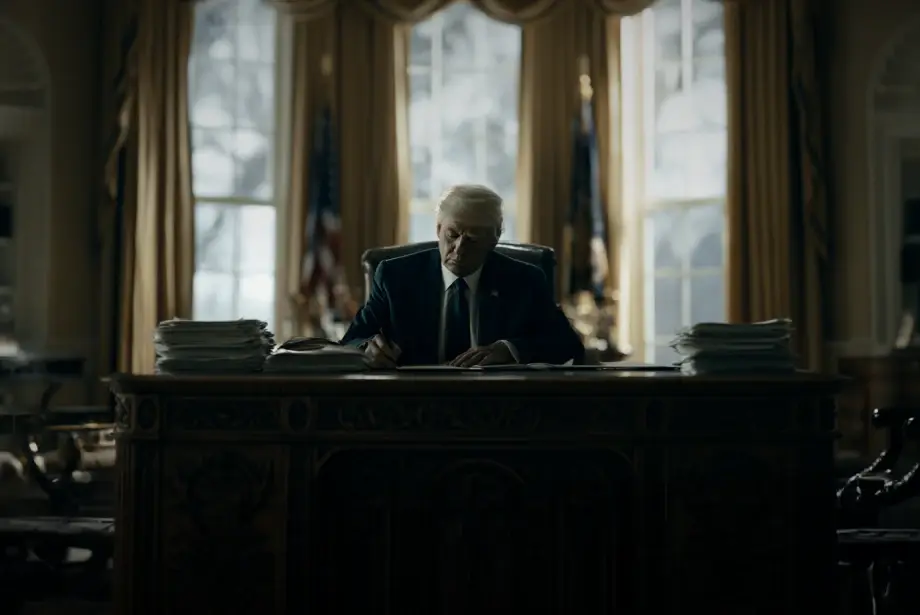
Global markets have experienced increased volatility following tariff-related developments, as former US President Donald Trump's sweeping trade measures spark volatility across currencies and equities. With reciprocal tariffs escalating, traders are witnessing aggressive capital shifts from risky assets to less volatile ones, which has sent signs of fragility across global stock markets.
Continue reading this piece to further understand the tariff's impact on global stock and forex markets.
Following the tariff announcements, the USD strengthened amidst reciprocal tariffs
The US Dollar strengthened following the tariff announcements after Trump announced massive new tariffs, riding on less risky flows and yield advantages. The DXY index, which tracks the Dollar against six major currencies, strengthened as investors anticipated higher inflation and rising US bond yields.
Risk-sensitive currencies bore the brunt of the fallout. The Australian Dollar (AUD), New Zealand dollar (NZD), Canadian dollar (CAD), and Mexican peso (MXN) all declined sharply, reflecting fears of global trade disruption. The offshore Chinese Yuan (CNH) dropped by 0.35% to 7.3212. This underlined the market's view of China's economic vulnerability under punitive US tariffs.
Some market participants anticipated that inflation could rise above 3%, which may influence future monetary policy decisions and currency movements. However, this could be at the risk of slowing global demand and long-term economic damage.
Stock markets decline
Equity markets reflected immediate concern right after the tariffs were imposed. The Dow Jones Industrial Average dropped 0.91% to 37,965.60. Similarly, the S&P 500 slipped 0.23% to 5,062.25, while the Nasdaq Composite ended flat at 0.10%. This masked the 5% intraday collapse in tech stocks that are highly exposed to global supply chains. In just two days, this may influence future monetary policy decisions and currency movements.
Trading volumes spiked significantly as well. On April 7, 2025, US stock trading hit an 18-year high, with 29 billion shares changing hands, far exceeding the 10-day average of 16.94 billion shares. The surge in volume reflected elevated investor anxiety as Trump floated a 50% tariff hike on Chinese goods.
Export-heavy sectors appeared particularly sensitive to tariff-related developments as investors priced in higher input costs and retaliatory damage to global demand.
CAD and NZD affected by global growth concerns.
The Canadian and New Zealand Dollars, seen as barometers of Chinese economic demand, were among the worst-performing major currencies in response to tariff shocks.
Market participants cited concerns that tariffs could affect trade flows and economic growth of a sharp slowdown in Chinese manufacturing and trade. This sent the CAD and NZD tumbling. Commodity-linked FX markets also reflected broad concerns about a cooldown in global consumption, which could weigh on mining and agricultural exports from Canada and New Zealand.
Commodity prices decline
The uncertainty triggered by the tariffs also caused sharp declines in commodity markets. Gold is often viewed by some investors as a defensive asset during periods of uncertainty and economic instability. It surged initially to $3,167 per ounce but fell 2% to $2,977 by April 7, only to rise slightly to $2,984.
Meanwhile, oil prices plummeted 7% following the tariff announcement, with an additional 2% drop, settling at $57 per barrel. This indicated the broad negative impact across various commodities.
Emerging market currencies experience depreciation.
Emerging market currencies faced significant depreciation due to the tariff war. The Indian Rupee dropped by 0.7%, its largest decline in three months, closing at 86.44 per Dollar.
Similarly, the Brazilian Real weakened from 5.67 to 6.00 per Dollar, and the South African Rand dropped by 4.4%, reaching R19.75. China's Yuan hit a 19-month low, with the reference rate set at 7.2038 Yuan per Dollar.
These movements were attributed by some analysts to concerns about trade and economic growth., leaving many emerging economies vulnerable to further economic challenges.
Recession concerns increase amid trade tensions.
Escalating trade tensions due to President Trump's tariff policies have intensified concerns over a potential global recession. Goldman Sachs and Morningstar place the odds between 45% and 50%.
These forecasts were based on analysts' assessments of the severe market disruptions caused by tariffs, which wiped out $10 trillion in global equity value. Overall, it represented 10% of global GDP. The resulting economic turmoil, including a sharp decline in major stock indices and falling commodity prices, has led some analysts to express concerns regarding economic growth as the world's largest economies face mounting pressure.
Volatile treasury yields and bond markets
The 10-year treasury yield fluctuated, reaching its lowest point since October at 4.106%. However, it then slightly rebounded to 4.21%. This dip in yields reflects heightened concerns over the economic impact of President Trump's tariffs. This has also fueled fears of a global trade war and potential economic slowdown.
As investors sought less risky assets, treasury prices surged, lowering yields. The bond market's reaction indicates widespread uncertainty, with expectations of future Federal Reserve rate cuts. Future yield movements may depend on economic and monetary policy developments and reflect a shift in economic sentiment.
Trade tensions have been cited as one factor influencing P/E ratios.
Rising trade policy uncertainty is weighing heavily on US stock valuations. According to Goldman Sachs Research, recent tariff-related developments have pushed the US Economic Policy Uncertainty Index to one of its highest readings in four decades.According to Goldman Sachs Research, increased uncertainty may lead investors to seek a higher risk premium, which could reduce US stocks' forward 12-month price-to-earnings (P/E) ratio by approximately 2-3%.
Greater unpredictability in trade policy also leads to increased market volatility and reluctance among investors. Combined with concerns about inflation and interest rate hikes, this uncertainty could undermine investor confidence and suppress overall stock market valuations in the short term.
Investor behaviour reflects ongoing market uncertainty.
Overall, tariff-induced uncertainty drives unusual investor behavior across both forex and equity markets. Some market participants have shifted exposure out of emerging market assets and into high-quality, low-risk currencies. Additionally, some investors have increased allocations to defensive sectors and pulling away from cyclical and export-driven stocks.
While the Dollar remains supported by rate differentials, economists caution that prolonged trade wars could lead to stagnation in global trade, weaker corporate margins, and declining investor confidence. Prolonged trade tensions may contribute to changes in investment allocation patterns in capital allocation, favoring less risky assets.
Disclaimer: All material published on our website is intended for informational purposes only and should not be considered personal advice or recommendation. As margin FX/CFDs are highly leveraged products, your gains and losses are magnified, and you could lose substantially more than your initial deposit. Investing in margin FX/CFDs does not give you any entitlements or rights to the underlying assets (e.g. the right to receive dividend payments). CFDs carry a high risk of investment loss.